01
Design foundation
Build a product DS from scratch, capable of supporting light/dark and multi-tenant without rework for every new client.
I took over as the sole designer of a pre-launch white-label SaaS. Built the foundation from scratch — design system, tokens, theme variables — and redesigned the entire product (mobile app + admin panel) for the first enterprise client.
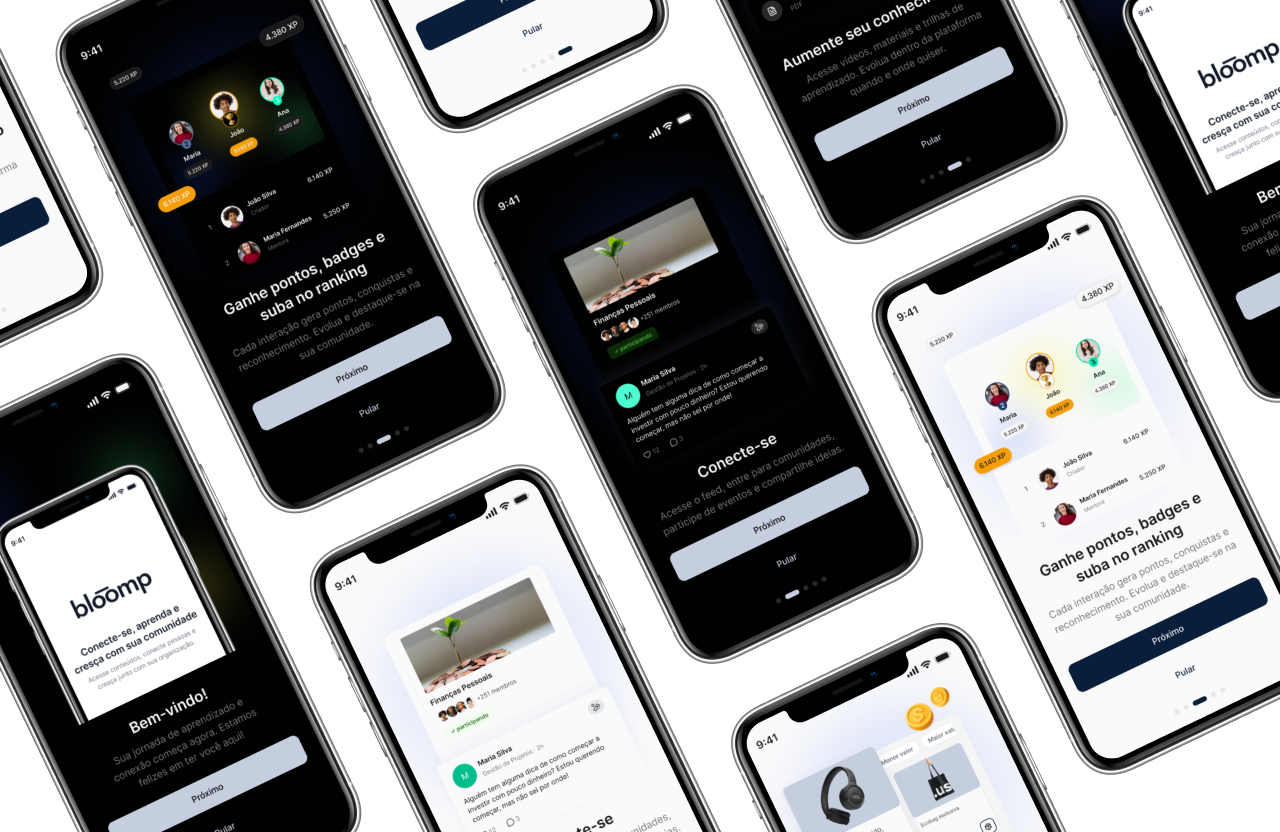
When I joined Listra, Bloomp was already under construction, but without components or a design system to make it real.
There was a simplified style guide in Figma. It wasn't componentized. It wasn't scalable. It had no real adaptation to the product's white-label model, and had serious accessibility issues in both light and dark modes. No design system, no structured discovery, no architecture built to grow.
As the only designer on the team product, my job was to turn that into a foundation before the first enterprise client came in.
Build a product DS from scratch, capable of supporting light/dark and multi-tenant without rework for every new client.
Redesign the architecture and critical flows of two different interfaces — mobile app and admin panel — while keeping them coherent.
Deliver all of it in time for the first enterprise client, as the sole designer, in direct collaboration with a full engineering team.
I started with structured discovery. Used NotebookLM for desk research on competitors, market patterns and the first client's context. In parallel, I built personas based on real product user profiles, JTBD mapping what each persona needs to accomplish — and why, journeys for both the app and the admin identifying friction and opportunities, and flows prioritized by usage frequency and business impact.
I also built a white-label readiness map — an audit of everything that needed to become a variable to support tenants — and gamification explorations aligned with JTBD.
All documented across FigJam boards and NotebookLM, shared with the team as the single source of truth.
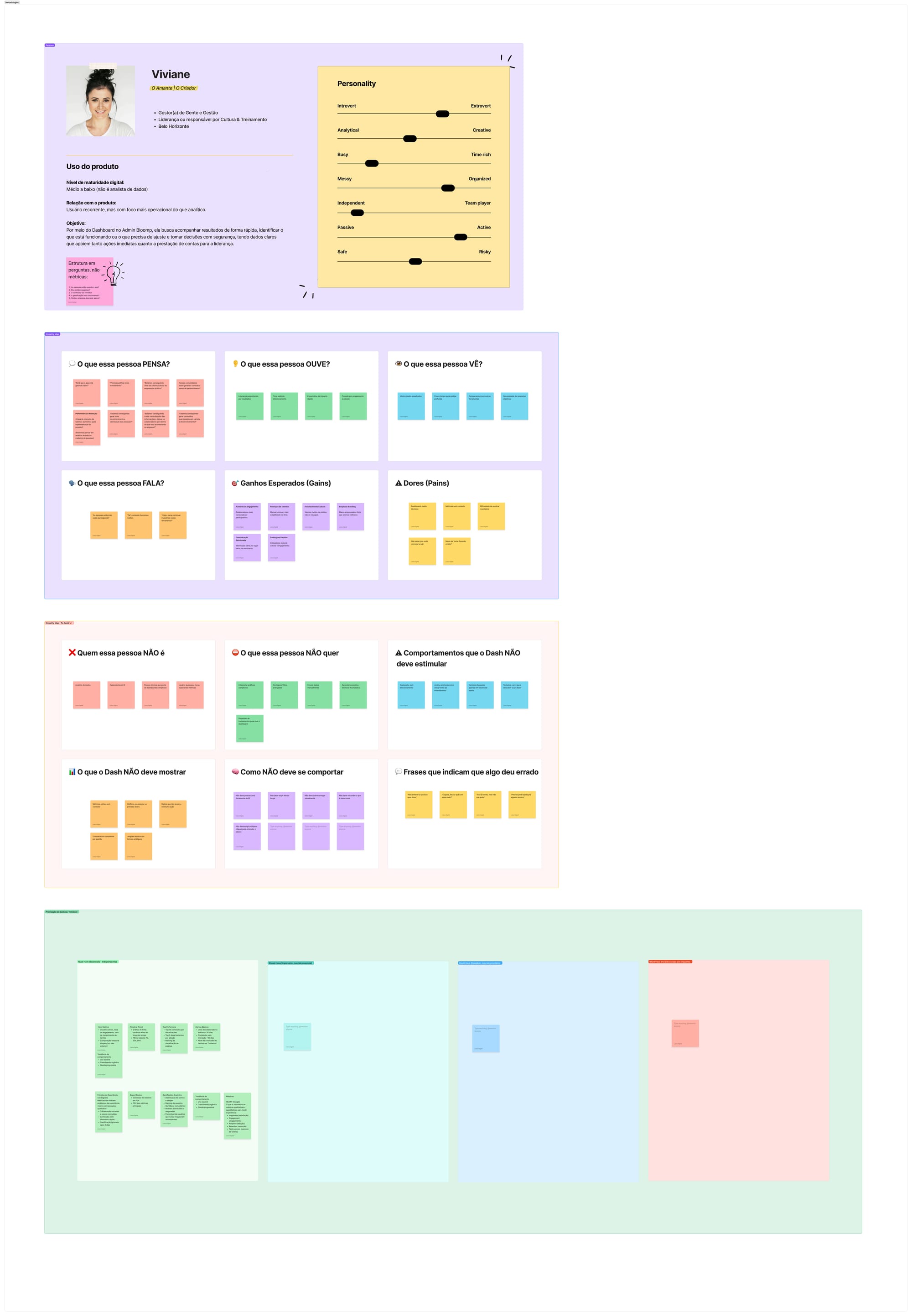 FigJam · White-Label Readiness Map
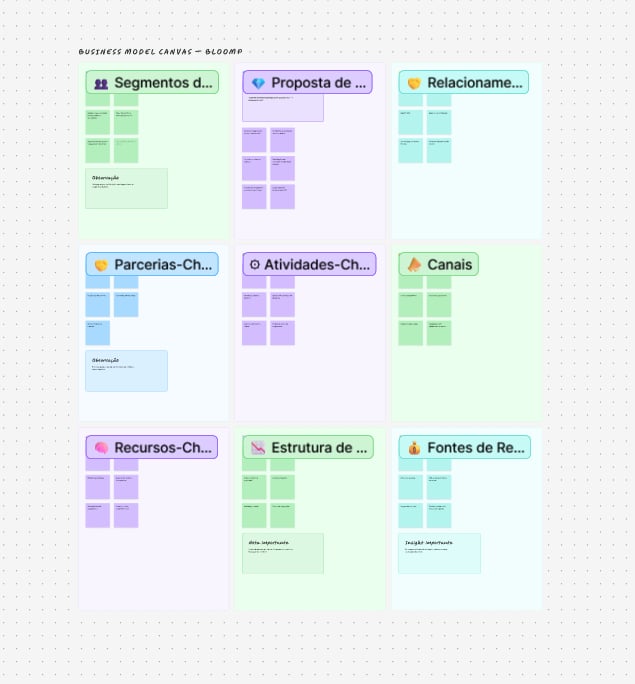 FigJam · Gamification explorations
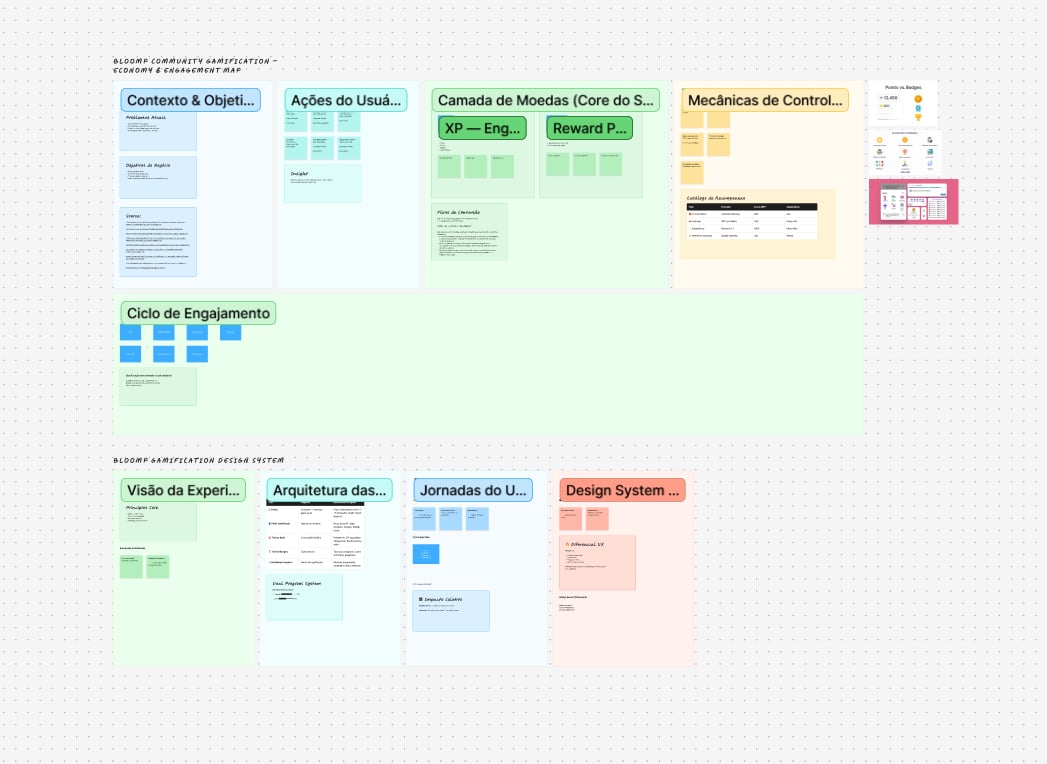 FigJam · App IA restructuring
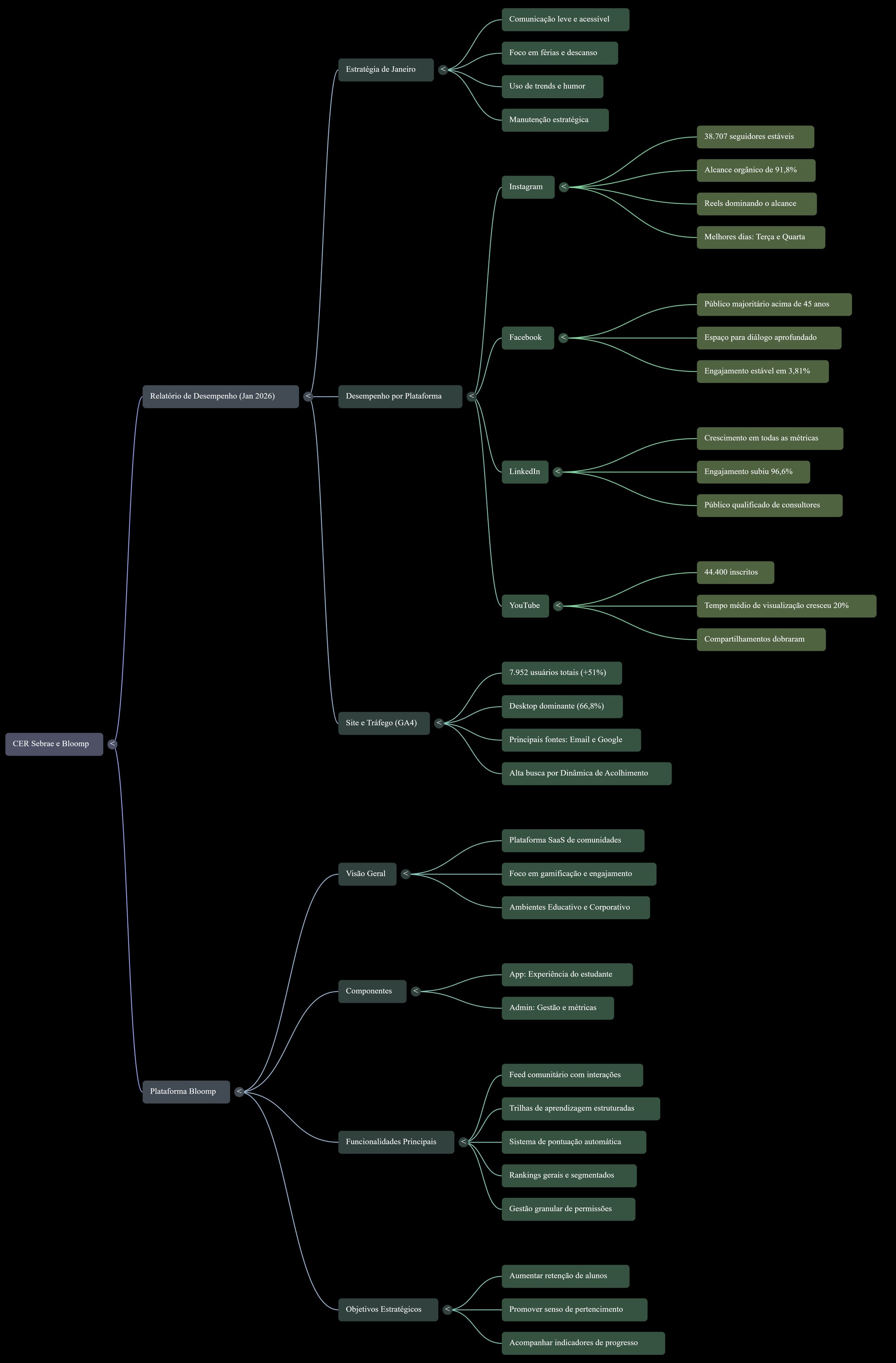 NotebookLM · Mind Map
The DS isn't a library of pretty components. It's the contract between design, engineering and every future tenant.
Color, spacing, typography, radius and shadow tokens — structured in layers (primitive → semantic → component) to allow theming without breaking consistency.
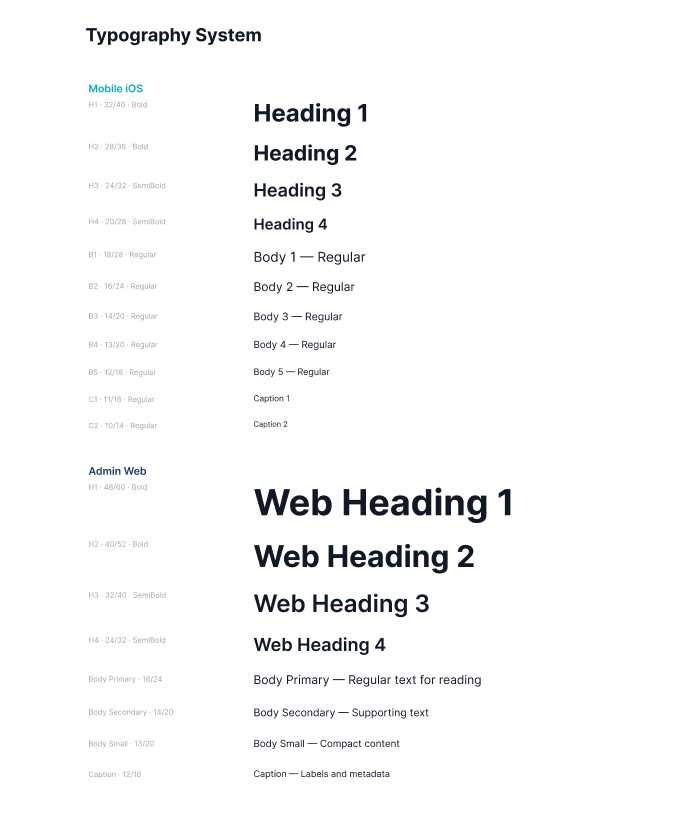
Complete local variables setup in Figma, with modes for light, dark and tenant. Every DS component responds automatically — no manual variants, no rework.
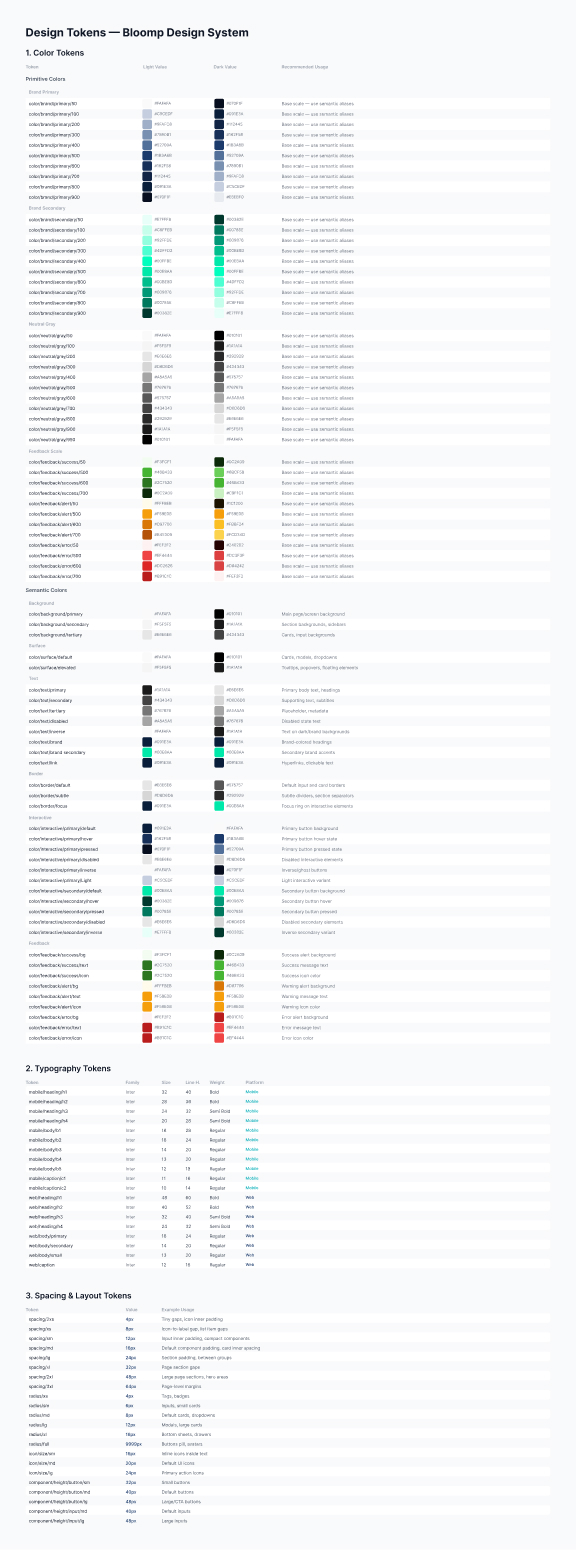
Componentized library on shadcn foundation, with props, states, variants and documentation. 1:1 parity between design and code.
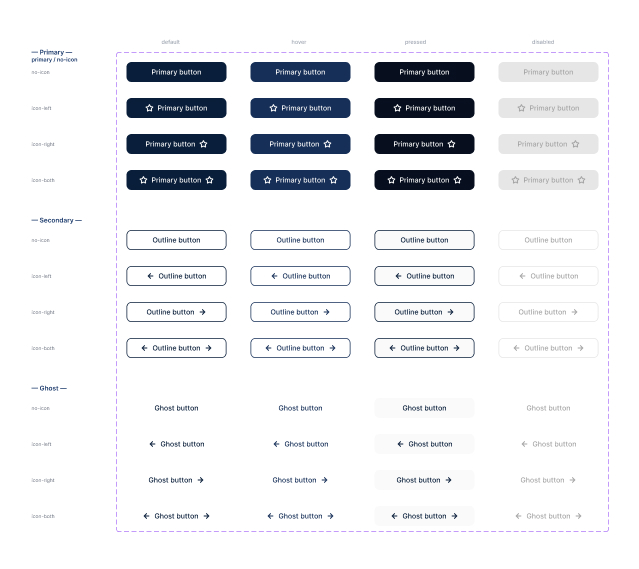
WCAG 2.1 AA ensured in both modes. Contrast, focus states, target size and reading hierarchy checked per component — resolving major debt from the previous version.
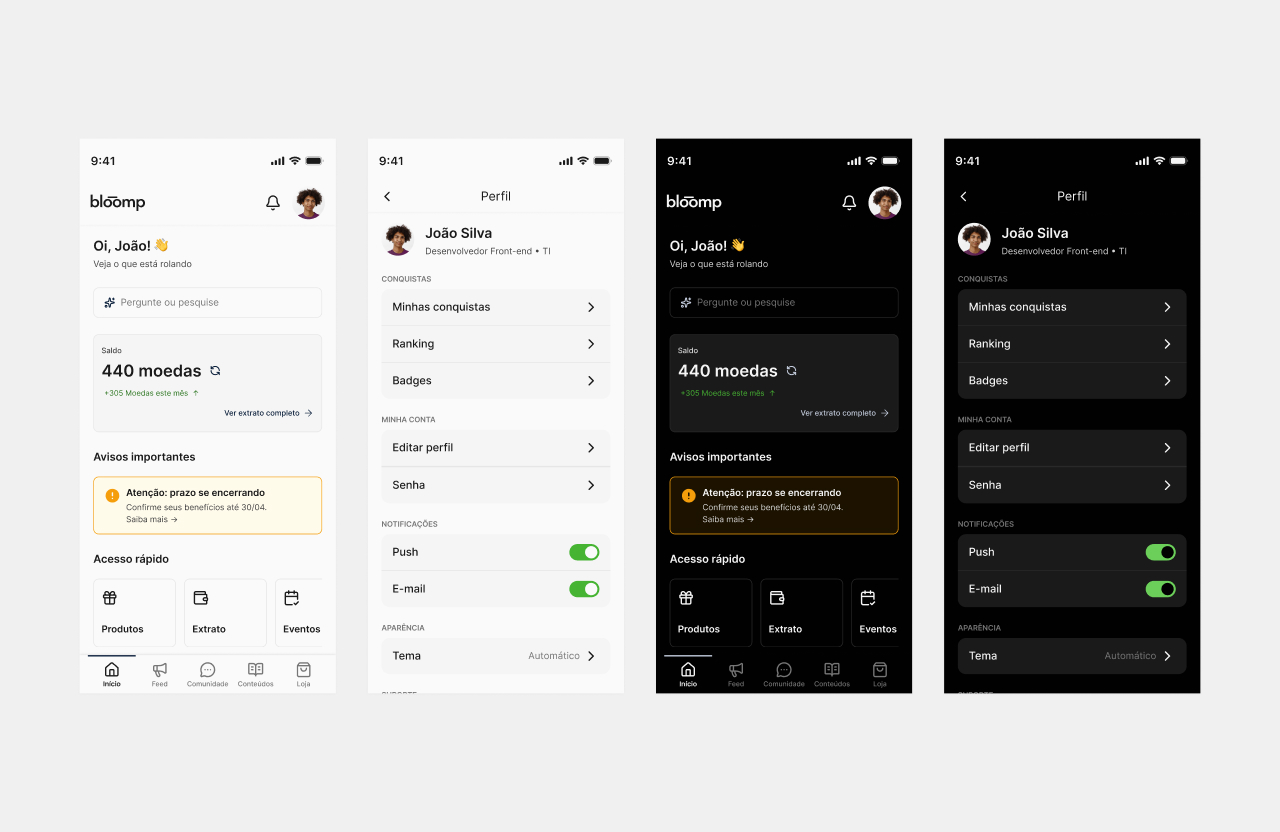
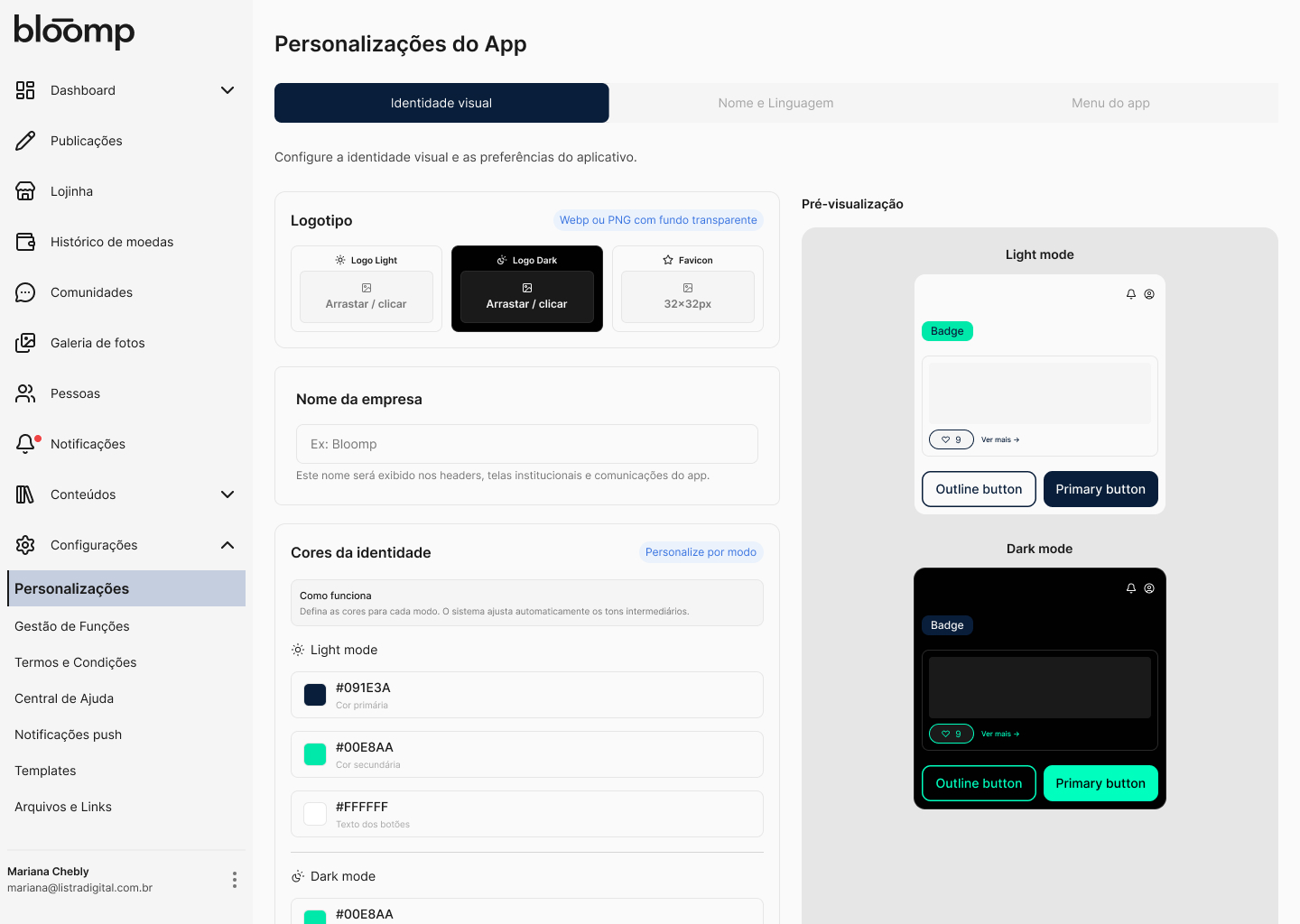
With the foundation in place, I redesigned both products. On the mobile app, I fully restructured the information architecture and simplified critical engagement flows. On the admin panel, I worked in coherence with the app — same language, same patterns — so the enterprise client has predictability when managing content, users and experiences.
Highlights: complete IA restructuring, new gamification system tied to discovery JTBDs, revised empty/error/loading/success states across every critical flow, and all flows adapted for multi-tenant without duplication.
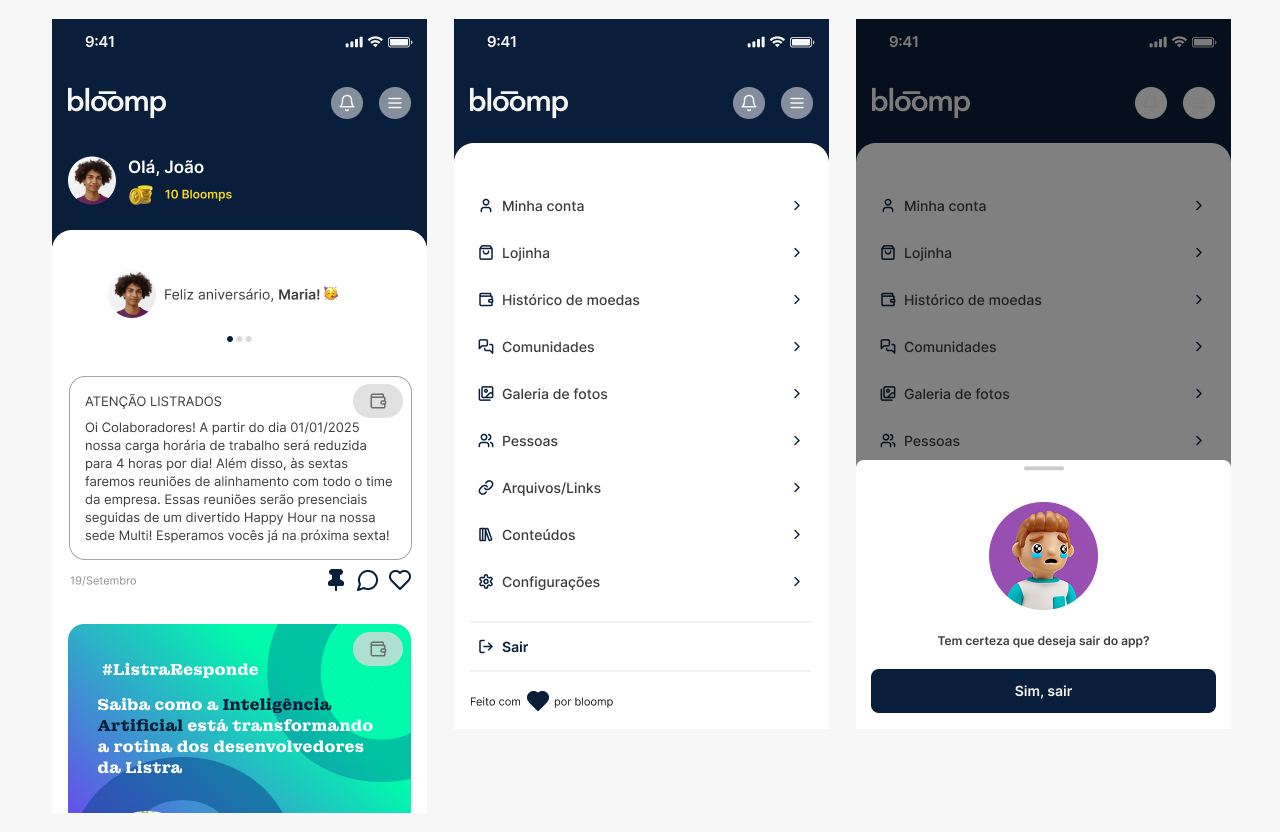
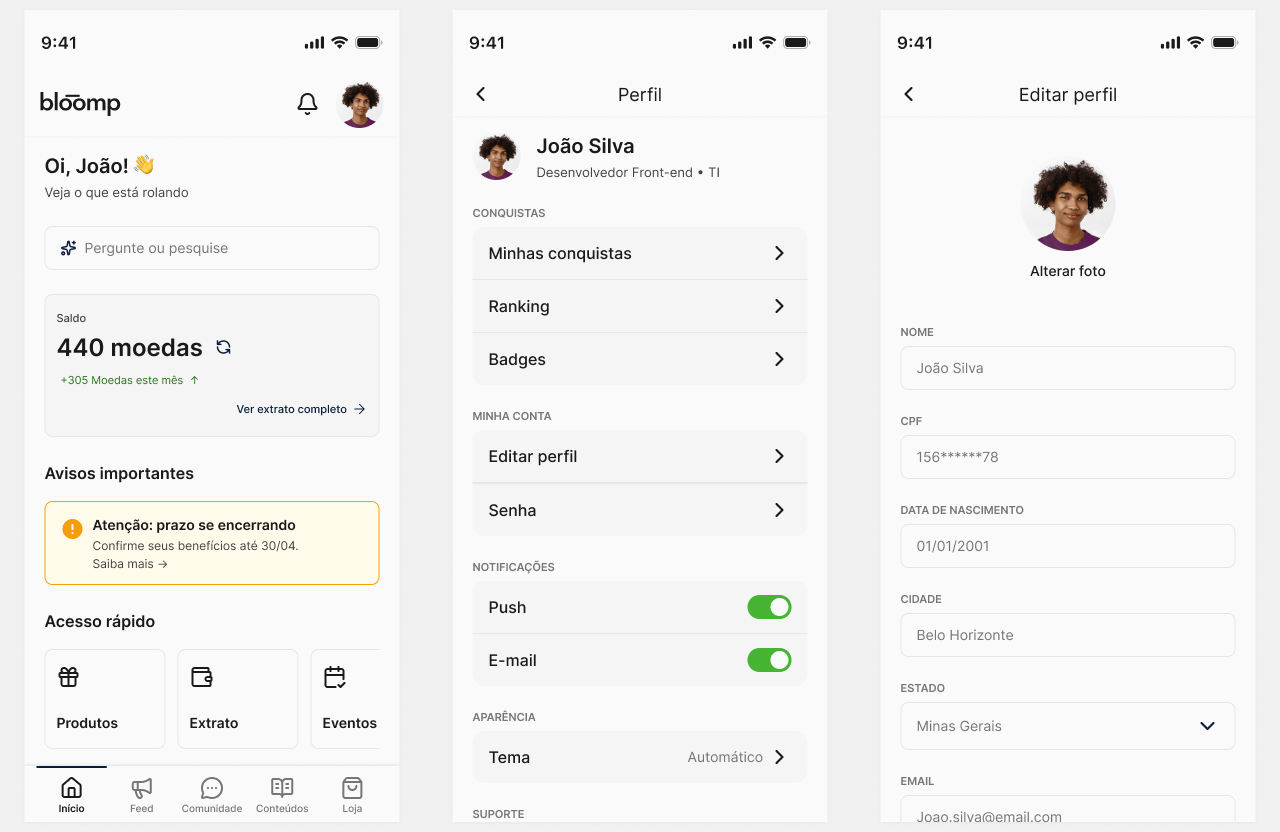 Before
After
Before
After
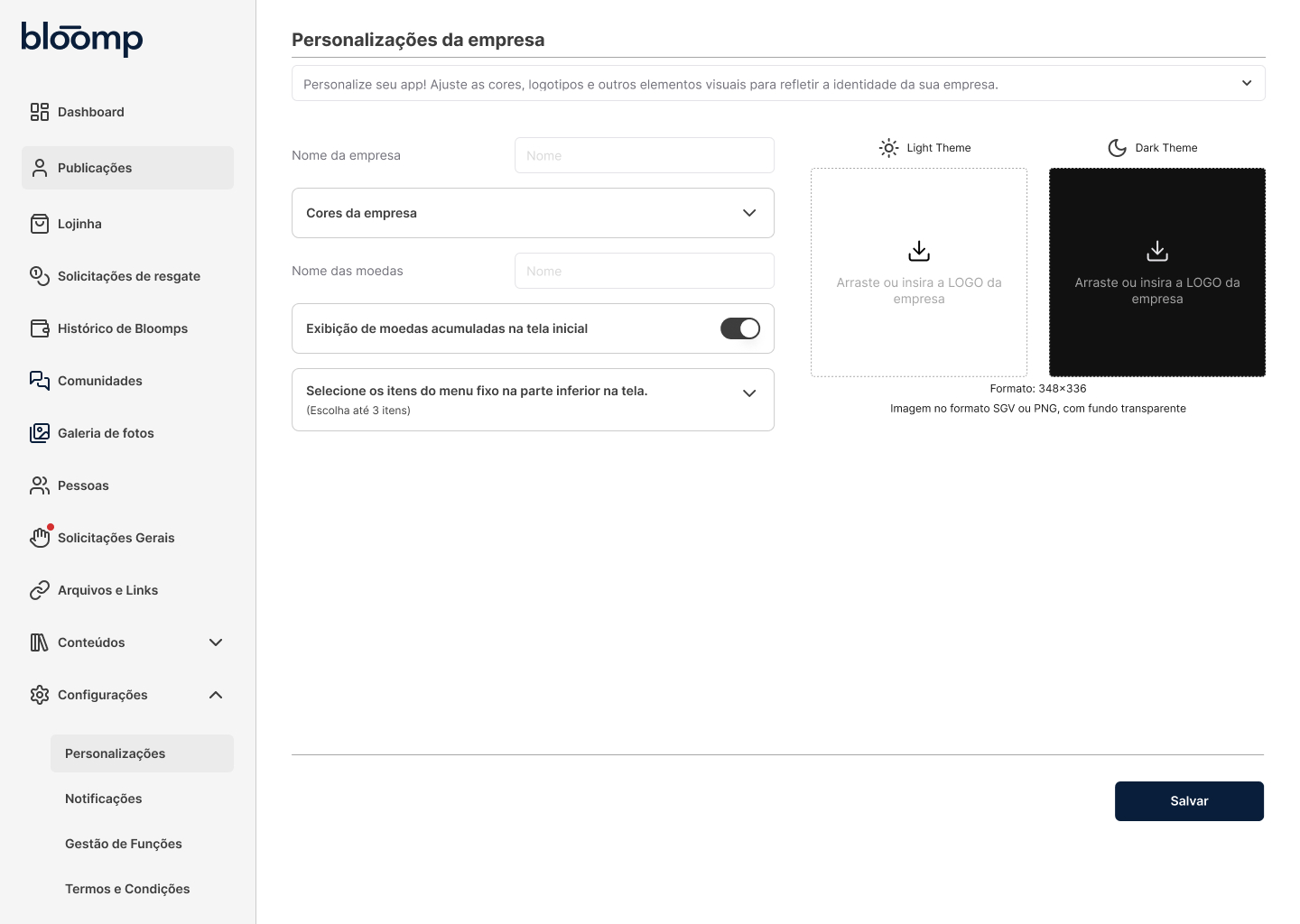
 Before
After
Before
After
I used AI as a real productivity lever across three moments of the process.
To digest sources, compare competitors and speed up synthesis — without diluting the critical reading.
For ideation, variant review and componentization speed-ups — keeping the judgment calls in my hands.
Quick prototypes in code to validate behavior with engineering before full implementation. Currently exploring vibe-coding tools like Cursor and Antigravity to expand this workflow further.
Less time on mechanical work, more time on strategic decisions. The team ships faster because I'm not the bottleneck.
Being the sole designer on a full engineering team forced a process that's both tight and scalable: